Esqube Industries LLC, a leading plastic products supplier and manufacturer in the UAE and India, specializes in innovative plastic solutions. The company ventured into the injection molding technique during the 21... ReadMore
Esqube Industries LLC, a leading plastic products supplier and manufacturer in the UAE and India, specializes in innovative plastic solutions. The company ventured into the injection molding technique during the 21... ReadMore


When it comes to seafood storage, the right container makes all the difference. Whether you’re handling fresh catch at sea or managing storage in a processing facility, choosing between a fish tub and a crate can directly impact freshness, hygiene, and efficiency. At Esqube, we help businesses simplify this decision with practical, durable solutions built for real-world use.
In this guide, you’ll clearly understand which option works best for your needs—and why.
Seafood is highly perishable. Even small storage mistakes can lead to spoilage, contamination, and financial loss.
The right container helps you:
• Consistent Temperature: Maintain stable internal temperatures to preserve seafood freshness and prevent rapid spoilage risks.
• Better Hygiene: Improve drainage systems and cleanliness to reduce contamination and maintain higher hygiene standards.
• Less Damage: Reduce physical handling damage by using proper containers designed for delicate seafood protection.
• Easy Transport: Simplify transportation processes with stackable designs that improve efficiency and save storage space.
• Food Safety Compliance: Meet strict food safety standards by using containers built for hygienic seafood handling.
Choosing between tubs and crates is not just about preference—it’s about performance.
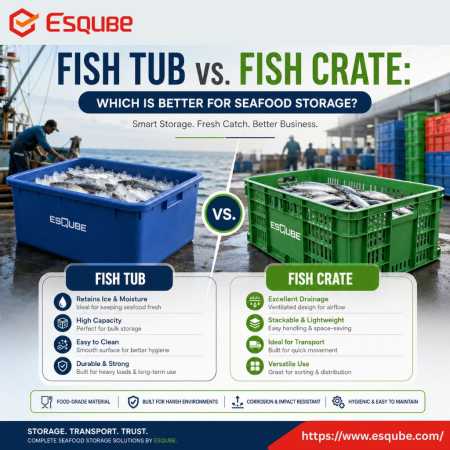
A fish tub is a solid, deep container designed to hold seafood along with ice or chilled water. It’s commonly used in fishing boats, markets, and processing units where moisture retention is essential.
• Solid walls to retain water and ice
• Smooth inner surfaces for easy cleaning
• High capacity for bulk storage
• Durable plastic construction
• When storing fish with ice slurry
• When preventing dehydration is critical
• When handling delicate seafood that bruises easily
• When hygiene and washing ease are priorities
A fish tub works best in environments where freshness depends on consistent moisture and minimal exposure to air.
Fish crates are ventilated containers designed for easy drainage and airflow. They are widely used for transporting seafood over short or long distances.
• Perforated design for drainage
• Stackable structure for efficient transport
• Lightweight and easy to handle
• Ideal for sorting and distribution
• During transportation from the docks to the markets
• For sorting and organizing different fish types
• When airflow is necessary to prevent odor buildup
• For quick loading and unloading operations
Crates are built for movement, not storage with liquids.
Let’s break it down clearly so you can decide faster.
• Fish Tub: Best for storage with ice and water
• Fish Crate: Best for dry handling and transport
• Fish Tub: Solid walls, no drainage
• Fish Crate: Open design with ventilation
• Fish Tub: Easier to clean due to smooth surfaces
• Fish Crate: Requires more attention due to holes
• Fish Tub: Bulk storage, heavier when filled
• Fish Crate: Lightweight, easy stacking
• Both are made from high-quality plastics, but tubs often handle heavier loads better.
The material used in both tubs and crates plays a critical role in durability and safety.
High-quality manufacturers use food-grade plastic that:
• Corrosion Resistance: Resists saltwater exposure effectively, ensuring long-lasting performance in harsh marine environments.
• Impact Strength: Withstands heavy impact during handling, reducing damage risks in busy seafood operations environments.
• Temperature Stability: Maintains structure under varying temperatures, preventing cracks or deformation during cold storage conditions.
• Hygiene Protection: Prevents bacterial buildup, supporting cleaner storage and improved food safety compliance standards consistently.
Working with a trusted plastic crate manufacturer ensures your containers meet industry standards. Similarly, experienced plastic molding manufacturers guarantee consistent design and long-term reliability.
Cost isn’t just about the purchase price. It’s about long-term value.
• Reduces spoilage loss
• Minimizes the need for additional cooling setups
• Long lifespan with proper care
• Lower upfront cost
• Easier logistics and storage
• Reduced labor during transportation
Your choice depends on whether you prioritize storage quality or transport efficiency.
Yes—and many businesses do.
Combining both solutions creates an efficient workflow:
• Use tubs for storage and preservation
• Use crates for transport and distribution
For example:
• Store freshly caught fish in tubs with ice
• Transfer to crates for delivery to markets
This hybrid approach improves efficiency while maintaining quality.
Before making a decision, consider these factors:
• Capacity Needs: Choose container size based on daily seafood volume and storage requirements carefully.
• Stacking Efficiency: Ensure containers stack securely to save space and improve handling efficiency.
• Cleaning Simplicity: Select containers with smooth surfaces for quick, thorough, and hygienic cleaning processes.
• Strength and Durability: Pick containers built to withstand heavy loads and rough industrial usage conditions.
• Food Safety Compliance: Use food-grade materials that meet safety standards for storing and handling seafood safely.
In large-scale operations, choosing the right industrial plastic crate can significantly improve logistics.
Your supplier matters as much as the product itself.
A reliable partner ensures:
• Consistent Quality: Ensures every product meets standards, reducing defects and maintaining long-term reliability consistently.
• On-Time Delivery: Delivers products on schedule, preventing delays and keeping your operations running smoothly.
• Flexible Customization: Offers tailored solutions to meet specific business needs, improving efficiency and usability.
• Strong After-Sales Support: Provides ongoing assistance, resolving issues quickly and ensuring long-term customer satisfaction.
If you’re sourcing in the Middle East, working with a trusted plastic crates supplier in the UAE ensures faster availability and compliance with regional standards.
Similarly, choosing a dependable plastic container manufacturer in the UAE helps maintain consistent quality across bulk orders.
Seafood handling demands strict hygiene.
Here’s how both options compare:
• Easier to sanitize
• No leakage risks
• Better containment of contaminants
• Requires thorough washing
• Can trap residues if not cleaned properly
• Better airflow reduces odor buildup
Using high-quality plastic tubs for fish ensures better compliance with hygiene standards in storage environments.
Here’s a simple way to decide:
• You store fish for longer durations
• You need to retain moisture and ice
• Hygiene is your top priority
• You focus on transportation
• You need stackable, lightweight solutions
• You handle frequent loading and unloading
• You want a complete storage and logistics system
• You manage seafood across multiple stages
If your seafood business is scaling, flexibility is key.
Using both tubs and crates allows you to:
• Reduce Waste: Minimize spoilage by using proper storage methods that keep seafood fresh longer.
• Improve Workflow: Streamline handling processes with organized containers that simplify storage and transportation tasks.
• Maintain Product Quality: Preserve freshness and texture by controlling temperature, moisture, and hygienic storage conditions.
• Adapt to Operations: Use flexible storage solutions that adjust easily to changing business needs and volumes.
Investing in the right containers today can prevent major losses tomorrow.
• Fish tubs are ideal for storage using the ability to hold in moisture and ice.
• Fish crates are great for transport and airflow.
• The material's quality directly impacts the durability of a product as well as hygiene.
• Combining both options creates an efficient system.
• The reliability of your suppliers is essential to long-term success
• Always ensure that your selection is in line with the operational requirements of your business.
Fish tubs are better because they retain moisture and support ice storage effectively.
They can be used short-term, but they are not ideal for long-term storage.
Clean regularly with food-safe disinfectants and ensure proper drying before reuse.
Some designs allow stacking, but crates are generally more stack-friendly.
At Esqube, you can explore durable and high-quality options designed for real use.
Choosing the right container is not complicated when you understand your needs. Whether you need better storage, smoother transport, or both, the right solution will improve your operations immediately.
At Esqube Industries LLC, we design solutions that help your business run smarter, cleaner, and more efficiently. If you’re still deciding between options, start with a fish tub for storage and build your system from there.